
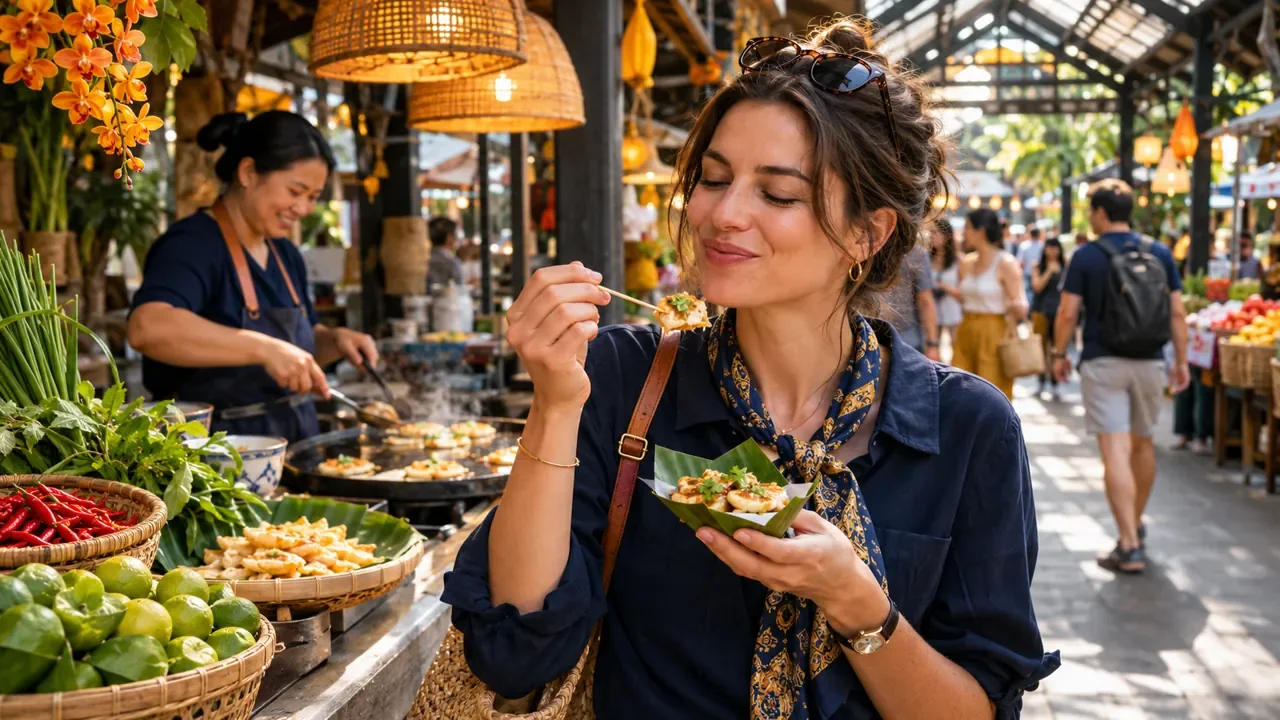
A food-focused day can lose its appeal if you spend it crossing the city between famous counters and waiting for the next photograph. Build the day around a neighborhood, your appetite, and a few worthwhile stops instead. You can be curious about food without turning every bite into a contest.
Choose a compact area
Start with a market district or a neighborhood with several different places you want to investigate. Check walking routes and current operating hours. A map covered in saved pins is not yet a useful plan if the stops are spread too far apart.
Group your possibilities into a short route with optional branches. That gives you choices if one stall is closed or a particular venue looks busier than you want.
Pick one anchor, not six must-dos
Choose the experience that matters most: a market visit, a cooking activity, or a particular meal. Understand any booking conditions, then leave space around it. Several prepaid meals or activities on the same day can remove the freedom to follow what looks appealing.
Think about portion sizes and appetite. Sharing where suitable, choosing small tastes, or keeping some stops for another day may be more enjoyable than ordering a full meal at every place.
For a bookable anchor, browse GetYourGuide for your chosen city and look for a food tour or cooking class that fits the neighborhood and time you have. Check which tastings, meals, and transfers are included before adding separate food stops.
Research the rhythm of the day
Check the specific venue’s information rather than assuming every market is active all day. Look for current opening hours, service periods, and whether a reservation or ticket is needed. An early visit is useful only if the place is actually operating then.
Allow for the time between ordering, eating, and moving on. Do not treat a thirty-minute gap on your calendar as proof you can finish a meal and reach the next reservation comfortably.
Give yourself permission to skip
Decide in advance how much waiting feels worthwhile to you. If a line would consume the time you wanted for the rest of the area, choose another option. A long queue can indicate popularity, but it does not tell you whether that experience is the right use of your day.
Keep a nearby alternative instead of searching from scratch whenever the first choice does not work. You are protecting the experience of exploring, not trying to complete a list perfectly.
Plan the practical details
Carry what you need for the outing and check how the businesses you intend to visit accept payment. Read prices and inclusions before ordering. If you have dietary requirements, ask about the actual preparation rather than relying on a general description of a cuisine.
Build in a place to sit, water, and a break from eating. The day can also include a museum, a neighborhood walk, or time by the water between food stops.
If suitable drinking-water refill points are available along the route, bring a bottle you can carry comfortably. The Nalgene 32 oz wide-mouth bottle on Amazon is one option if you need one; check its size and weight against the bag you plan to use.
Use this simple structure
- Morning: one market or neighborhood to explore.
- Midday: the meal or activity you care about most.
- Afternoon: a walk and optional small tastes nearby.
- Evening: a flexible choice based on appetite and energy.
This is a suggested structure, not a timetable or a promise about opening hours. Adjust it around your chosen city and venues. The aim is to come home remembering what you tasted, rather than how long you waited.