
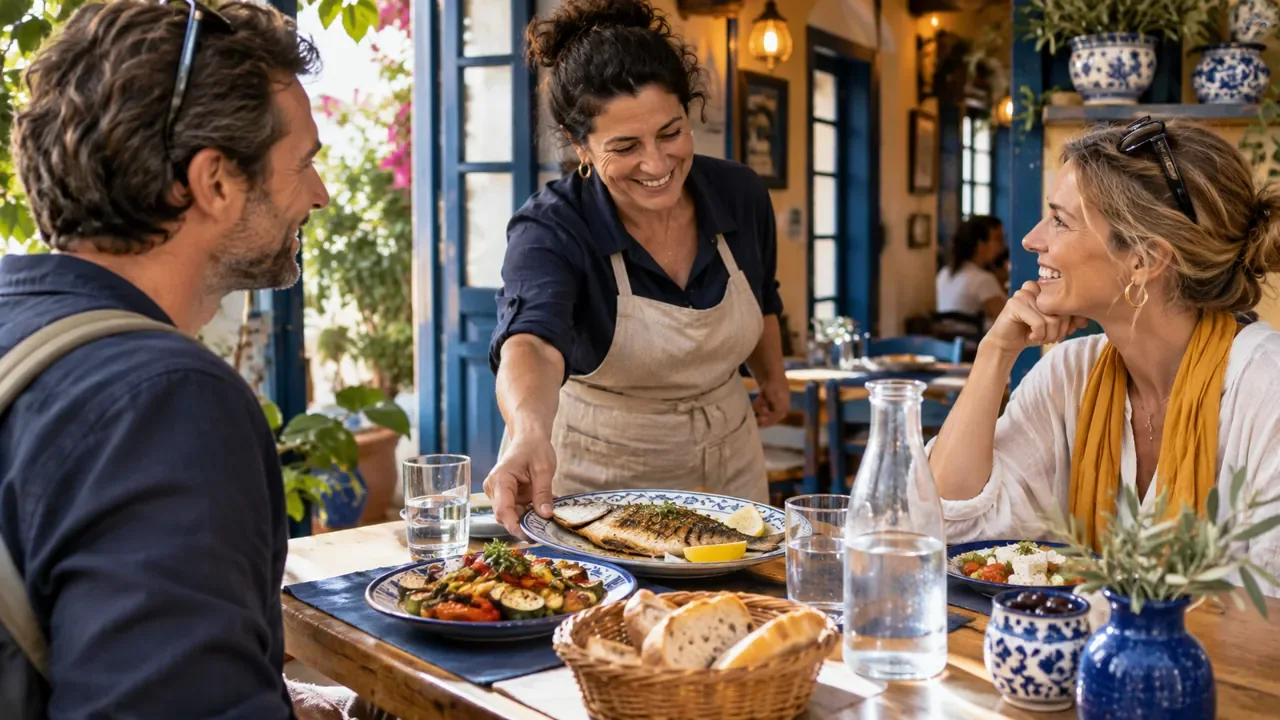
You do not need a reservation for every evening to eat memorably abroad. A small amount of neighborhood research can leave room for the places you notice while walking, the lunch that becomes the day’s highlight, or the simple dinner near your accommodation. The trick is to prepare options without turning every meal into a fixed appointment.
Choose a neighborhood before a restaurant list
Start with the areas you expect to explore. Save a handful of possible places near each one, rather than a citywide list that repeatedly sends you across town. Include different formats: a sit-down meal, a casual counter, and a simple option for the evening you feel tired.
Check current opening hours and where the entrance actually is. A saved listing is a starting point, not proof that the business will be serving on your chosen day.
Reserve the meals that genuinely matter
If one particular restaurant is an important reason for your visit, research its booking process and decide whether to commit. Leave ordinary meals more flexible where that suits your trip. You do not gain much freedom by leaving an essential experience to chance, nor by reserving three meals a day you may no longer want.
Put any cancellation deadline or deposit condition beside the booking. A meal reservation is still part of your itinerary and spending plan.
Read for the experience you want
Look for specific recent descriptions of the food, service, portion style, and atmosphere. A popular place may suit visitors seeking a lively night but not someone hoping for a quiet conversation. Pictures can help you understand the setting, but they do not confirm today’s menu or prices.
Look at the menu where available. Compare the kind of meal you intend to order, rather than assuming the cheapest visible item represents a full dinner.
Ask focused local questions
Instead of asking for the best restaurant, describe what you want: a casual lunch within walking distance, a place suitable for your dietary needs, or somewhere serving a particular dish. A specific question is easier to answer usefully.
Treat a recommendation as a lead to investigate. Check the location, opening time, and menu yourself before reorganizing the day around it. Local advice is useful without being a guarantee.
If you would prefer a guided introduction, search your city on GetYourGuide and compare available food walks or market tours. Read the operator’s inclusions, meeting point, and dietary arrangements; you can keep the rest of your meals independent.
Leave room for the place you discover
Keep some unallocated time around lunch or dinner. When you see a tempting place, consider whether it fits the day and your budget rather than whether it already appears on your saved list. You can enjoy a well-known restaurant and an unexpected neighborhood meal on the same trip.
If you have dietary requirements, explain them clearly to the provider and ask about the actual ingredients and preparation. Do not assume a photograph or translated dish name answers every question.
Build a small food shortlist
- One meal you would be disappointed to miss.
- A few options near your planned neighborhoods.
- A simple meal close to your accommodation.
- Current opening information to recheck on the day.
- Enough free time to follow a promising discovery.
The result is a practical safety net for your appetite, not another itinerary you must obey. A memorable meal is often as much about where it fits in the day as how famous the restaurant is.