
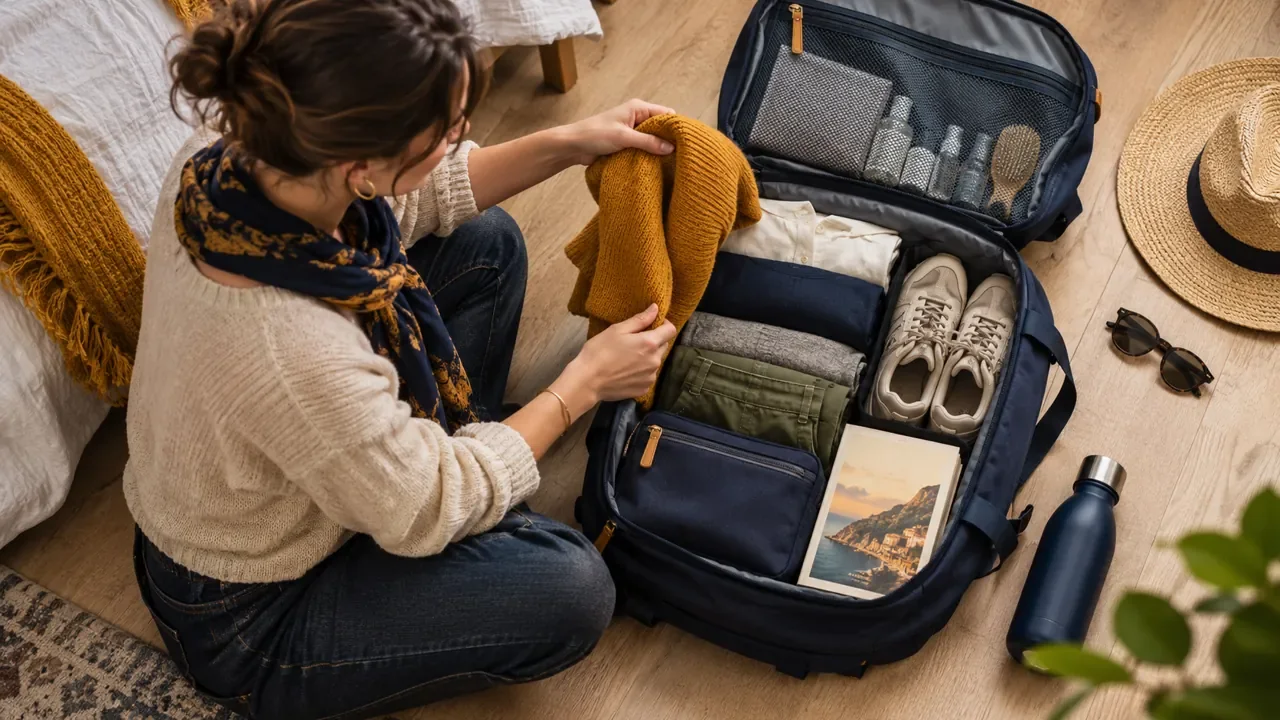
The most useful first backpacking purchase may be the one you do not make. Before filling a shopping cart with travel gadgets, decide what your bag needs to do for the actual trip. A few comfortable stays in towns and cities need a different packing plan from remote camping. This guide is about travel between accommodation bases, not wilderness expeditions.
Start with your journey, not a gear list
Write down the climate, the accommodation, and the activities you expect. Then identify the things you will carry between them. If your route involves stairs, stations, and walking to a guesthouse, try carrying your packed bag around home before deciding that everything inside deserves a place.
Use a bag you already own for the first test. Check the current size and weight conditions of every airline on your route before relying on a carry-on claim in a product listing. A bag being called a travel backpack does not guarantee that it meets a particular fare’s allowance.
Your accommodation affects what you need to carry. Compare hostels on Booking.com in your chosen destination and read the actual linen, towel, locker, and laundry details before adding those items to your packing list.
Build a small clothing system
Choose clothes that work together and suit your activities. Lay out complete combinations rather than separate piles of favorites. Think about when you can realistically do laundry and how clothes will dry; do not assume every stay has the facilities you need.
Wear your most substantial practical outfit for the journey if that suits the weather. Pack for the trip you are planning rather than every imaginary occasion. If an item serves only a highly unlikely plan, check whether leaving it out creates a real problem.
Put essentials where you can reach them
Keep the documents, medication, and other essentials you need during the journey accessible. Use a simple pouch or pocket arrangement so you can find an item without unloading everything at a station. Choose organization that helps you; an expensive set of containers is not a requirement. If loose clothing is making your bag difficult to use, compare Amazon Essentials packing cubes on Amazon. Check the dimensions against your bag before buying; pouches you already own may do the job.
Check current screening and transport instructions for anything restricted or unusual. Avoid transferring important products into unmarked containers if doing so would make their identification or use unclear.
Test the bag before departure
Pack it, close it, and walk with it for a realistic stretch. Try lifting it, sitting with it, and finding the things you need. Note where the weight pulls and what is difficult to reach. Remove or reorganize items before concluding that you need a different bag.
If you do buy something, buy to solve a problem identified in the test. Better shoes for your planned walking may matter more than another accessory. Comfort is specific to you and your route.
Make a final three-pile check
- Essential: required for the journey or a planned activity.
- Useful: makes the trip easier often enough to justify carrying it.
- Optional: appealing, but not needed for your actual plans.
Pack the first pile, assess the second, and be strict with the third. Leave a little room for the belongings to go back into the bag easily after your first stay. A bag that closes only after a perfect packing exercise can become frustrating on the road.
Useful official resources
Check current item and packing guidance through the TSA travel checklist, and verify baggage conditions directly with every airline on your route.