
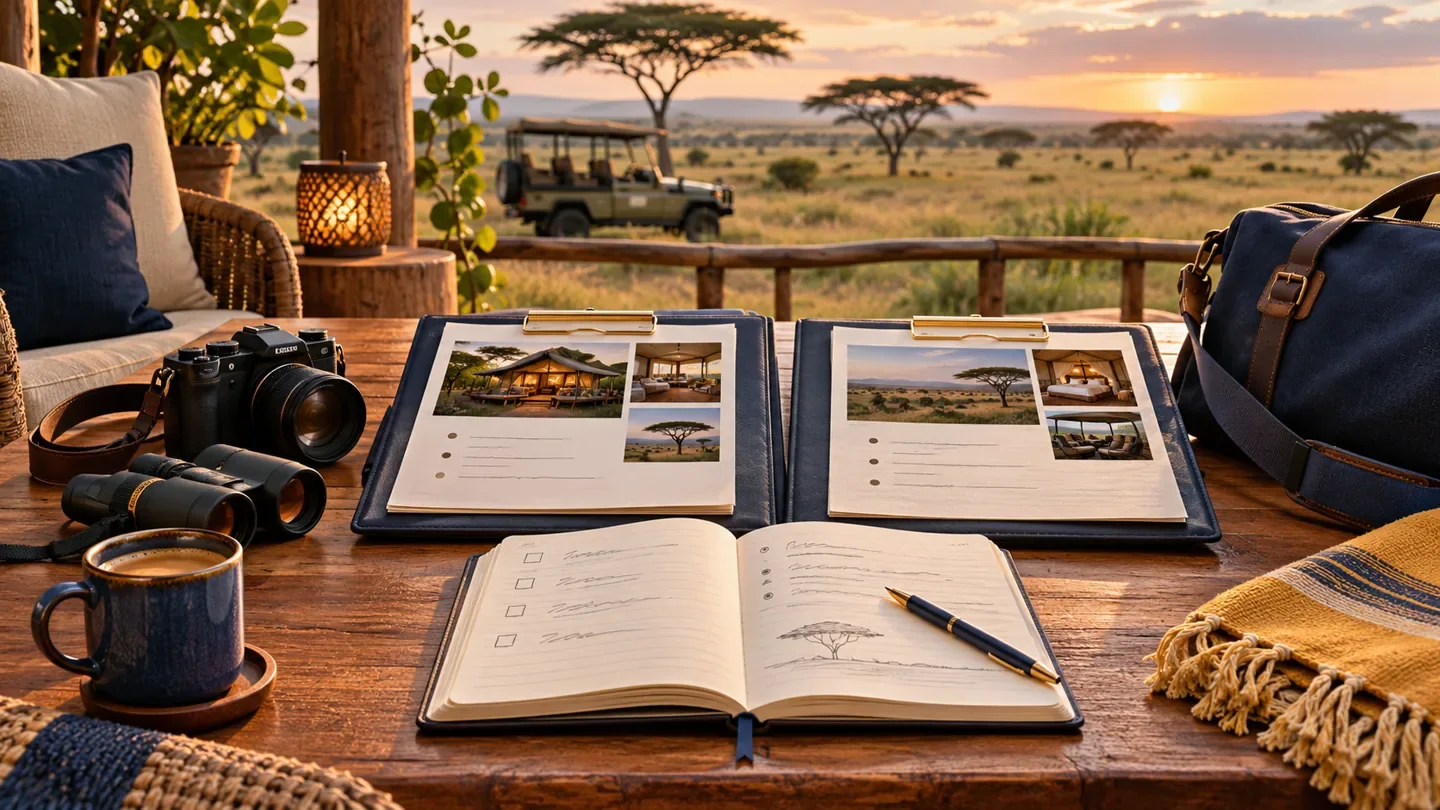
Two safari quotes with the same number of days can describe very different holidays. One may include the transfers, accommodation, and activities you need; another may be a starting price with important extras still to add. Compare the actual itinerary before deciding which offer is better value.
Compare the same trip first
Write down the destination, dates, number of travelers, accommodation standard, and experiences that matter most to you. Then check each quote against that brief. Different countries, parks, seasons, and activity types do not form a fair comparison simply because both listings use the word safari.
A cheaper offer may suit you well, but be clear about what changed to reach that price. Fewer activities, a different location, or a more basic room can all be sensible choices when they match your priorities.
Ask where you will sleep
Request accommodation names, room arrangements, and the nights allocated to each property. Check how the location relates to the places you will visit. A property description alone does not tell you how much time you will spend transferring each day.
If a provider offers a substitute property, ask what standard and location it will have and when the change will be confirmed. Confirm any accessibility, dietary, or room requirements that are essential to your trip.
If you need a separate night before or after the safari, compare arrival and departure stays on Booking.com in the actual pickup or departure city. Confirm first whether the safari package already includes that night; a room-only listing is not a substitute for a complete safari quote.
Make every transfer visible
Identify the start and end points of the tour and how you reach them. Ask which airport or accommodation pickups are included, whether regional transport is part of the price, and whether a private or shared arrangement is being quoted. Include the cost and time of connecting your international arrival to the tour itself.
Ask for approximate travel time between overnight stops. The point is not to avoid every long journey; it is to understand which days are mostly transport and which offer the activities you wanted.
List the included activities and fees
Request a written description of the activities, their frequency, and any separately charged entrance, conservation, or permit costs that apply to that specific itinerary. Do not assume a named destination means every possible experience there is included.
Ask whether an activity is private or shared and whether the quoted price depends on a minimum group size. Clarify optional excursions and any meals or drinks not included. Wildlife sightings are not guaranteed, so judge the itinerary and provider’s arrangements rather than promises of seeing a particular animal.
Read the booking conditions
Check the payment schedule, cancellation terms, amendment rules, and what happens if an included service becomes unavailable. Confirm the provider’s identity and contact details, and use relevant tourism authorities or established industry resources to research the business. Keep the written offer and receipt together.
For activities with particular participation or preparation requirements, obtain the operator’s current instructions. Do not rely on a general article to decide whether an activity meets your individual needs.
Build a two-column comparison
For each quote, list the accommodation total, transfers, included activities, applicable fees, meals, and remaining extras. Mark unclear items as questions rather than treating them as free. Add only the optional activities you actually want.
Once both offers are clear, compare time, comfort, and the experiences included alongside the price. The better choice is the one you understand and can afford, not necessarily the one with the shortest headline figure.
Questions to send before paying
- Which exact properties, room types, and nights are included?
- Which transfers and activities are private or shared?
- Which fees and meals still need to be paid separately?
- What changes if another participant cancels?
- What are the payment, cancellation, and substitution terms?
Official planning resources
For a destination-specific example, Visit Rwanda’s official trip-planning resources and booking information can help you start researching an itinerary. Check the equivalent official resources for the country you choose.
Keep the details together
Save accommodation, transfer arrangements, and provider confirmations in your travel planner before you leave.